Summer Compost Smells? The Aeration Fix (Perfect for Compost Tumblers)
Why compost smells worse in summer
Warm weather speeds everything up. That is great for decomposition, but it also means that any imbalance in your compost can turn into a compost odour fix emergency very quickly.
In a healthy system, microbes break scraps down with enough oxygen, so the smell is earthy, sweet and “forest floor” like. When oxygen runs low, anaerobic microbes take over. That is when compost smells rotten, like sewage, ammonia or vinegar. Summer heat accelerates this switch, especially in tightly packed or very wet compost.
Our composting range is designed to make aeration easier, particularly our compost tumblers, but your habits still matter. The good news is that odours are usually a sign of something simple you can correct.
The aeration fix: why oxygen is the key
The single most powerful way to fix a smelly compost is to improve compost aeration. Oxygen does three main things:
- Supports the “good” aerobic microbes that break material down quickly and cleanly
- Reduces the risk of slime, matting and soggy, smelly pockets
- Helps regulate temperature, especially in hot weather compost
In an open heap, aeration often means forking the pile. In a Maze compost tumbler, the drum design lets you do the same job by turning a handle. Regular turning pulls in fresh air, breaks up clumps and mixes wet material through dry carbon.

Why compost tumblers shine in summer
Using a tumbler for summer composting has a few key advantages over a static pile:
- Easy, clean aeration: You can turn the entire batch in a few seconds, with no fork or back strain.
- Rodent and pest resistance: A closed drum reduces the chance of flies, rodents and pets reaching rich summer food scraps.
- Moisture and leachate control: Many Maze tumblers are raised off the ground, which helps prevent soggy bases and compaction.
From our experience with products like the EASY-TURN 245 L Maze Compost Tumbler and geared twin tumblers, the households who turn most often tend to have the least trouble with compost smell in summer.
How to aerate compost properly in a tumbler
1. Turn more often in hot weather
In cooler months, you might get away with turning once or twice a week. In summer, we suggest:
- Turning the tumbler every day or every second day, especially after adding a fresh load of food scraps or grass clippings
- Doing a few full rotations each time, so the contents are properly mixed
This simple habit adds fresh air and helps you spot moisture problems early.
2. Add structure, not just scraps
If your tumbler is full of soft kitchen scraps and green lawn clippings, it will quickly compact. To keep air spaces open, always add:
- Shredded cardboard or paper
- Dry leaves or straw
- Small twiggy material
Every time you add a bucket of “greens”, add a small bucket of these “browns”. This carbon rich structure is as important for compost aeration as turning.
3. Check moisture as you go
As you turn, watch for:
- Too wet: Heavy, soggy clumps that smear on the sides, strong odour, leachate dripping out
- Too dry: Contents look dusty, very light and are not heating at all
Wet and smelly? Add more dry browns and turn. Very dry? Lightly moisten as you add new material, then turn to mix. The right level feels like a wrung out sponge.

Quick troubleshooting for smelly compost
Here is a simple compost troubleshooting checklist for a stinky summer batch in a tumbler.
If your compost smells like rotten eggs or sewage
Likely cause: Too wet, compacted, low oxygen.
Fix:
- Stop adding wet material for a few days.
- Add shredded cardboard, dry leaves or wood shavings.
- Turn the tumbler thoroughly to break up clumps.
- Leave the air vents clear.
If your compost smells like ammonia
Likely cause: Too much nitrogen rich input such as fresh grass, manure or lots of food scraps, not enough carbon.
Fix:
- Add at least one or two buckets of dry “browns”.
- Turn more frequently.
- Reduce large single type inputs (for example layer grass with cardboard instead of adding a huge thick layer).
If there are white fungal threads
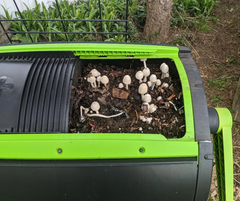
This often means active decomposition, not necessarily a problem. In fact, fungal activity is part of a healthy backyard compost. Focus on smell and texture more than looks.
Summer specific tips for Maze compost tumblers
Our Maze composting lineup includes several tumblers designed for Aussie backyards. To get the best odour control in summer:
- Place your tumbler in light shade if possible, to avoid overheating in direct afternoon sun.
- Use smaller pieces: Chop or tear large items like cardboard, corn cobs and stalks so they break down more evenly.
- Avoid overfilling: Leave some headspace in the drum so material can tumble freely rather than forming a single heavy lump.
- Consider a two batch rhythm: If you have a twin tumbler, fill one side and then let it mature while you start fresh in the other. This stabilises each batch and reduces smell.
These small tweaks, combined with consistent turning, help Maze tumblers deliver fast, low odour compost even during heatwaves.

FAQs
Why does my compost smell so bad in summer?
In most cases, a strong, unpleasant compost smell means your system has gone low on oxygen, especially in hot weather. Warm conditions speed up decomposition, so wet, compacted materials become anaerobic very quickly. The result is rotten or sewer like odours. In a compost tumbler, this is usually solved by turning more often, adding dry carbon rich material and checking moisture so the mix is damp but not soggy.
How do I stop my compost tumbler from smelling?
To stop a compost tumbler from smelling:
- Turn it regularly to improve compost aeration.
- Balance “greens” (food scraps, grass) with “browns” (cardboard, dry leaves, straw).
- Keep moisture at a wrung out sponge level, not dripping wet.
- Avoid overfilling and very thick layers of one material.
- In summer, move the tumbler out of harsh sun if possible and monitor more frequently.
With these simple habits, most odours disappear quickly and your compost smells earthy rather than rotten.
Fresh compost, even in peak summer
Smelly compost is not a sign that you have failed. It is just feedback that your system needs more air, more structure or less water, especially when the weather heats up. By focusing on compost aeration, moisture balance and smarter feeding, your backyard compost can stay productive and low odour all summer.
Our compost tumblers are built to make this as easy as possible, with drum designs that turn effortlessly and help you manage your mix in seconds. With a few simple habits, summer becomes the season your compost thrives, not the time you give up because of the smell.