Kitchen Compost Caddy: Setup, Liners & Daily Routine
Kitchen Compost Caddy: The Setup, Liners and Routine That Actually Work
The short answer: a 7L caddy with compostable bags, emptied daily in warm weather and every couple of days in cooler months, is all most households need to divert food scraps from landfill without dealing with smells or fruit flies. The caddy itself matters less than the routine around it.
Why Does Kitchen Composting Make Such a Difference?
Nearly half of typical household rubbish is organic material — food scraps, peels, coffee grounds, eggshells. When those scraps go to landfill, they break down without oxygen and produce methane, a potent greenhouse gas. When they go into a home compost system instead, they become a resource that feeds your soil.
A kitchen caddy is what makes that diversion realistic on a daily basis. Rather than making a trip to the outdoor compost every time you peel a potato, you collect scraps at the bench and empty them in one go. It sounds small, but it is the difference between composting consistently and composting occasionally.
Which Kitchen Compost Caddy Size Is Right for You?
There is no single right answer, but size does matter — mostly because it affects how often you empty, which affects everything else.
A 7L compost caddy suits smaller households or anyone who cooks most days but not in huge volumes. It fills quickly, which is actually an advantage — a faster fill means a shorter time between empties, which means less chance of smells developing. Our 7L Kitchen Caddy with 20 Compostable Bags is a straightforward ready-to-go option if you want the caddy and liners sorted at once.
A 9L slim caddy works better if you have a larger household, cook in bigger volumes, or prefer to empty every couple of days rather than daily. The slimmer profile is designed to fit neatly in a narrow under-sink cupboard without taking over the space.
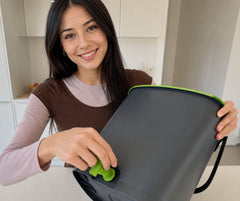
Whichever size you go with, look for a secure lid that closes properly, a smooth interior that rinses clean easily, and a handle for carrying scraps outside without mess.
Do You Actually Need Compostable Bags?
You can use a kitchen caddy without liners, but compostable bags make the whole system noticeably easier to manage — especially in warmer weather.
A fitted compostable liner keeps the caddy walls clean, means you can lift the whole bag out and carry it to your outdoor system without touching the scraps directly, and helps contain moisture and odour between empties. When you swap bags, a quick rinse and dry is all the caddy needs.
When buying compostable bags, look for certified compostable rather than just "degradable" or "biodegradable" — those terms don't guarantee the bag will break down properly in a home compost system and may contain plastics. Size matters too: a bag that's too big will bunch up, too small and it slips down.

How Do You Set Up a Kitchen Compost Station That Works?
The setup itself is simple — the location is what most people get wrong.
Put the caddy somewhere visible and within reach of your main food prep area. On the bench beside the chopping board, or directly under the sink in the front of the cupboard (not hidden at the back). If it's inconvenient to reach, you'll stop using it.
Keep a supply of compostable bags close by so swapping the liner takes seconds, not a rummage through the cupboard. A small printed list of what can and can't go in is useful if you share the kitchen with others.
Most food scraps are fine to add: fruit and vegetable offcuts, coffee grounds and paper filters, tea leaves, eggshells, stale bread, small amounts of pasta or rice.
Be mindful of: large amounts of citrus or onion if you're feeding a worm farm, and meat, dairy or oily food if you're going into a home compost system rather than a council FOGO bin. Check what your outdoor setup and local council accept, then tailor accordingly.
How Often Should You Empty a Kitchen Compost Caddy?
This is where season and household size both come into play.
In warmer months - late spring through summer into early autumn - aim to empty a 7L caddy daily, or every one to two days for a 9L. Warmth speeds breakdown, and fruit scraps in particular can attract fruit flies and develop strong odours quickly if they sit too long. Your nose is the best guide: if you can smell it when you open the lid, it's time to empty regardless of how full it is.
In cooler months, every two to three days is usually fine for most households, as long as the caddy isn't overly packed with wet scraps.
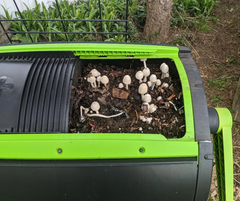
Your outdoor destination could be a compost tumbler, a worm farm, a standard outdoor compost bin, or your council FOGO bin - whatever system you have running. Tie the compostable bag, drop it in, add a fresh liner, done.
How Do You Prevent Fruit Flies and Smells?
Both problems have the same root cause: scraps sitting too long, or a caddy that isn't being rinsed between bags. A few habits fix both.
Keep the lid closed every time you add scraps - an open lid is the easiest entry point for fruit flies. If you're chopping a lot of fruit, layer a small amount of shredded paper or dry cardboard on top before closing the lid; it creates a light barrier and helps balance the moisture level when the scraps reach your outdoor system.
Avoid pouring liquids — soup, sauces, cooking water - directly into the caddy. They pool at the bottom and smell fast. Drain them separately.
When you swap bags, give the inside a quick rinse with water and a small amount of mild detergent if needed, then dry it before fitting the new liner. A clean caddy is far less appealing to insects and far easier to keep on top of.

Frequently Asked Questions
How often should I empty my kitchen compost caddy? In warm weather, empty a 7L caddy at least once a day if you cook regularly. For a 9L caddy, every one to two days usually works. In cooler months you can stretch to every two to three days. If you can smell the contents when you open the lid, that's your cue to empty regardless of how full it is.
Is it better to keep the caddy on the bench or under the sink? Both work well. Bench-top placement is more convenient and tends to encourage more consistent use because it's always in sight. Under the sink keeps the bench clear, and a slim-profile caddy fits neatly in most cupboards. Avoid placing it next to the oven or dishwasher where extra heat will speed up smells regardless of season.
Are compostable bags really necessary? Not strictly necessary, but they make the whole routine significantly easier. Certified compostable bags keep the caddy cleaner, reduce direct contact with wet scraps, and make it simple to carry food waste to your outdoor compost or FOGO bin without spillage. Most people who try them don't go back to going liner-free.
Wrapping Up
A good kitchen compost setup doesn't need to be complicated. The right size caddy, fitted compostable bags, and a simple routine for emptying and rinsing is genuinely all it takes. Get those three things right and kitchen composting becomes a habit rather than a chore — which means less organic waste going to landfill and more going back into your garden where it belongs.
Browse our kitchen compost range if you're looking for a caddy, liners, or both to get started.