Too Cold to Compost Outside? Try Bokashi Indoors Instead
Bokashi composting lets you ferment food scraps indoors in a sealed bin, using a bran inoculated with beneficial microbes. Unlike outdoor composting, bokashi works in any weather, handles meat and dairy, and produces no smell when done properly. It's a practical solution for winter, when trudging out to the tumbler in the rain is the first habit to slip.
What Is Bokashi Composting?
Bokashi is a fermentation process, not decomposition in the traditional sense. You layer food scraps in an airtight bin, sprinkle bokashi bran over each layer, and seal it up. The bran carries a culture of beneficial microbes that pickle the waste rather than rot it. There's no turning, no aerating, and no trip outside required.
Once the bin is full, the fermented waste still needs to finish breaking down, either buried in the garden or added to an outdoor compost system. Bokashi is best thought of as the first stage, not a replacement for a tumbler or bin, but a way to keep processing scraps when the outdoor system slows down or isn't accessible.
How Is Bokashi Different From Regular Composting?
Regular composting relies on oxygen and aerobic bacteria to break waste down, which is why tumblers need turning and can slow right down in cold weather. Bokashi is anaerobic fermentation, sealed away from air, so temperature has far less impact on how it performs. That's what makes it a solid winter companion to an outdoor system rather than a competitor to it.
The other major difference is what you can put in. Regular compost bins typically exclude meat, fish, dairy, and cooked food because they attract pests and smell as they rot. Bokashi ferments these just as easily as vegetable scraps, which opens up composting to a much wider range of kitchen waste.

Can You Put Meat and Dairy in a Bokashi Bin?
Yes. Bokashi's fermentation process handles meat, fish, dairy, and cooked leftovers without the odour or pest issues that come with trying to compost them outdoors. This is one of the biggest practical advantages over a standard tumbler, particularly for households that generate a lot of food scraps from cooking rather than just fruit and veg peelings.
Does Bokashi Smell?
A properly sealed bokashi bin has a mild vinegary or pickled smell when opened, not the rotten smell associated with decomposition gone wrong. The 20L Airtight Bokashi Indoor Composter Kit is designed with an airtight seal specifically to keep odour contained between uses, which makes it suitable for a kitchen bench or under-sink spot without becoming a nuisance.
If a bin does start to smell off rather than pickled, it usually means not enough bran was used, or the lid wasn't sealed properly between additions. Keeping layers thin and bran generous solves most odour issues before they start.
How Long Does Bokashi Take?
Filling a bokashi bin typically takes one to two weeks depending on household size, followed by a two week fermentation period once sealed. After that, the fermented waste is ready to be buried in the garden or added to an outdoor compost system to finish breaking down. Running two bins on rotation, one filling while one ferments, keeps the process continuous.
What Do You Do With Bokashi Once It's Fermented?
Fermented bokashi waste isn't finished compost yet, it's pre-treated waste that still needs to break down fully. The most common approach is burying it directly in garden soil, where it decomposes quickly thanks to the fermentation head start. It can also be added to an outdoor compost tumbler to speed up that system's breakdown process, or dug into an empty garden bed to condition the soil before planting.
The liquid that drains from the bin during fermentation, sometimes called bokashi tea, can be diluted and used as a liquid fertiliser, or poured straight down drains to help break down buildup.

Getting Started With the 20L Airtight Bokashi Indoor Composter Kit
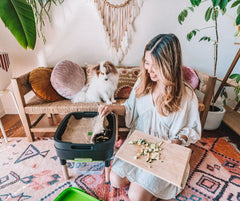
The 20L Airtight Bokashi Indoor Composter Kit comes with everything needed to start straight away, including the bin, tap for draining liquid, strainer, handle, a compactor to help pack scraps down and remove air pockets, and 500ml of liquid bokashi to get the fermentation going. The airtight design keeps smell and pests out, and the tap makes draining bokashi tea simple without lifting the whole bin.
At 20 litres it suits most households, and being made from recycled PP, it's a durable option that keeps composting going through the coldest months without asking you to go anywhere near the back garden.
Winter doesn't have to mean a pause on composting. With bokashi running on the kitchen bench, food waste keeps getting diverted from landfill regardless of what's happening outside, and by spring there's fermented material ready to give the garden a head start.