Compost Too Wet? The 10-Minute Browns Reset Fix
If your compost smells bad, looks soggy, or has turned into a dense, matted lump after recent rain, the fix is simpler than you think. In most cases, waterlogged compost comes down to one imbalance: too many greens, not enough browns. The 10-minute browns reset gets oxygen back into the mix, soaks up excess moisture, and gives the good microbes what they need to take over again.
Why Does Compost Get Too Wet?
Compost needs a balance of greens (nitrogen-rich materials like food scraps, grass clippings and fresh garden waste) and browns (carbon-rich materials like dry leaves, cardboard, paper and straw). In a healthy pile, that balance keeps things moist but aerated — think wrung-out sponge, not soaking wet cloth.
Heavy rain, a run of humid weather, or simply adding too many wet scraps at once tips that balance. When the pile gets waterlogged, oxygen can't move through it, the aerobic microbes that do the actual composting work start to suffocate, and anaerobic bacteria take over instead. That's where the smell comes from — that rotten, sulphurous odour is a sign your compost has gone anaerobic.
The good news is it's almost always reversible. You don't need to start again.
How Do You Know If Your Compost Is Too Wet?
A few clear signs:
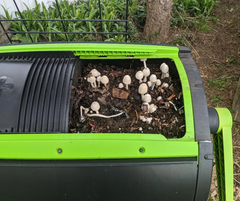
- The contents look dark, matted and compacted rather than loose and crumbly
- There's a strong, unpleasant smell when you open the lid — sour, sulphurous or like rotting food
- You can see liquid pooling at the bottom of the drum or bin
- When you grab a handful and squeeze, water drips out freely
If any of those sound familiar, it's time for a browns reset.

What Is the Browns Reset and How Does It Work?
The browns reset is exactly what it sounds like — a targeted addition of dry, carbon-rich materials to rebalance a wet pile, followed by a thorough turn to mix everything through and reintroduce oxygen.
It takes about 10 minutes and most of what you need is probably already at home.
What Browns Should You Use?
The best browns for a quick reset are materials that are dry, absorbent, and easy to break into small pieces so they mix through quickly. Good options include:
Shredded cardboard or torn cardboard pieces — the most accessible option for most households. Break down boxes, tear them into rough pieces, and add generously. Cardboard is highly absorbent and breaks down well once it's mixed through.
Shredded paper or newspaper — another great absorbent option. Avoid glossy paper or heavily inked materials.
Dry leaves — if you have them from autumn, these are ideal. Crunch them up before adding so they don't mat together.
Straw or sugarcane mulch — light, airy and quick to mix through.
Sawdust from untreated timber — very absorbent and effective in small amounts. Avoid treated or painted timber.
Avoid adding fresh grass clippings, fruit scraps or any other wet materials during the reset — those are greens and will make the problem worse, not better.
The 10-Minute Browns Reset: Step by Step
Step 1 — Gather your browns (2 minutes) Grab whatever dry material you have available. Shredded cardboard is the easiest. For a standard tumbler or bin, aim for roughly the same volume of browns as the wet material already in there — when in doubt, add more rather than less.
Step 2 — Add the browns in layers (3 minutes) Open your bin or tumbler and add the dry material in layers rather than dumping it all at once. Alternating between the wet existing material and fresh dry browns helps it mix through more evenly.
Step 3 — Turn thoroughly (3 minutes) Give the whole thing a good turn — several full rotations if you're using a tumbler, or a deep fork-through if you're using a bin. The goal is to break up any matted clumps, mix the browns through the wet material, and open up air pockets throughout the pile. With our EASY-TURN 245L Compost Tumbler, a few full rotations does this quickly without much effort.
Step 4 — Check drainage (2 minutes) If you're using a tumbler, make sure the air vents aren't blocked. If you're using a bin, check that the base has drainage and isn't sitting in pooled water. Lift it onto pot feet or a couple of bricks if needed to allow airflow underneath.
Step 5 — Leave it and check tomorrow Give the pile 24 hours before you assess. A successful reset will start to smell noticeably better within a day, and within two to three days the material should look more open and loose. If it's still very wet, repeat the process with another round of browns.
How Do You Stop It Happening Again?
A few habits make a big difference going forward.
Keep a browns supply nearby. The most common reason compost gets out of balance is simply that people add scraps without having dry material on hand. Keep a bag or box of shredded cardboard, dry leaves or straw next to your compost so it's easy to add a handful every time you add food scraps.
Aim for roughly two parts browns to one part greens by volume. It doesn't need to be precise, but this ratio keeps most home compost systems in good shape.
Cover your bin or tumbler during heavy rain. If your outdoor compost bin doesn't have a lid, consider positioning it under an eave or covering it with a piece of timber or tarp during extended wet weather. Maze compost tumblers are fully enclosed, which means rain can't get directly into the drum — a significant advantage after a downpour.
Chop wet scraps small. Smaller pieces integrate with browns faster and don't pool moisture in one spot.

Does a Twin Tumbler Help With This Problem?
It genuinely does. With a single-chamber system, a wet batch means the whole thing is affected. With our 180L Geared Twin Tumbler, you can keep one side as the active input chamber while the other finishes off — which means if one side gets knocked out of balance after rain, the other is still producing. It also makes it easier to manage greens and browns separately as you go, rather than trying to correct an existing batch.
Frequently Asked Questions
Can I save compost that has gone completely anaerobic and smells terrible? In most cases, yes. As long as the material hasn't completely decomposed into a sludgy liquid, a thorough browns reset followed by daily turning for a week will usually bring it back. The smell should ease significantly within two to three days of the first reset as oxygen returns to the pile and aerobic microbes re-establish. If it's genuinely beyond saving, the liquid can be diluted heavily and used as a soil drench — it still contains nutrients even if it's not finished compost.
How much cardboard do I actually need to add? More than most people initially think. A good starting point is to match the volume of browns to the volume of wet material already in the bin or tumbler. If the pile is very wet, you may need to do two rounds of adding browns over a couple of days rather than fixing it all at once. There's no real risk of adding too many browns — the worst outcome is that breakdown slows slightly, which is easily corrected by adding more greens next time.
Should I stop adding food scraps while I do the reset? For two to three days, yes. Let the browns reset do its work before you add more wet material. Once the smell has eased and the texture is starting to open up, you can resume adding scraps — just make sure to match each addition of greens with a handful of dry browns going forward.
A wet, smelly compost after rain or a run of humid weather is frustrating, but it's one of the easiest problems to fix. Grab your browns, give it a thorough turn, and check back tomorrow — in most cases the difference is noticeable within 24 hours.
The key going forward is keeping browns on hand and adding them consistently rather than in catch-up doses. Get that habit right and your compost will stay balanced through whatever the weather throws at it.
Browse our full compost tumbler range if you're looking for a system that makes balancing greens and browns easier year-round.